Photodynamic Therapy (PDT)
Photodynamic therapy (PDT) is a laser-based treatment used mainly for chronic cases of central serous retinopathy (CSR); it combines a light-sensitive medication (verteporfin) given through a vein with low-energy laser light directed at the affected blood vessels to help seal the leakage beneath the retina.
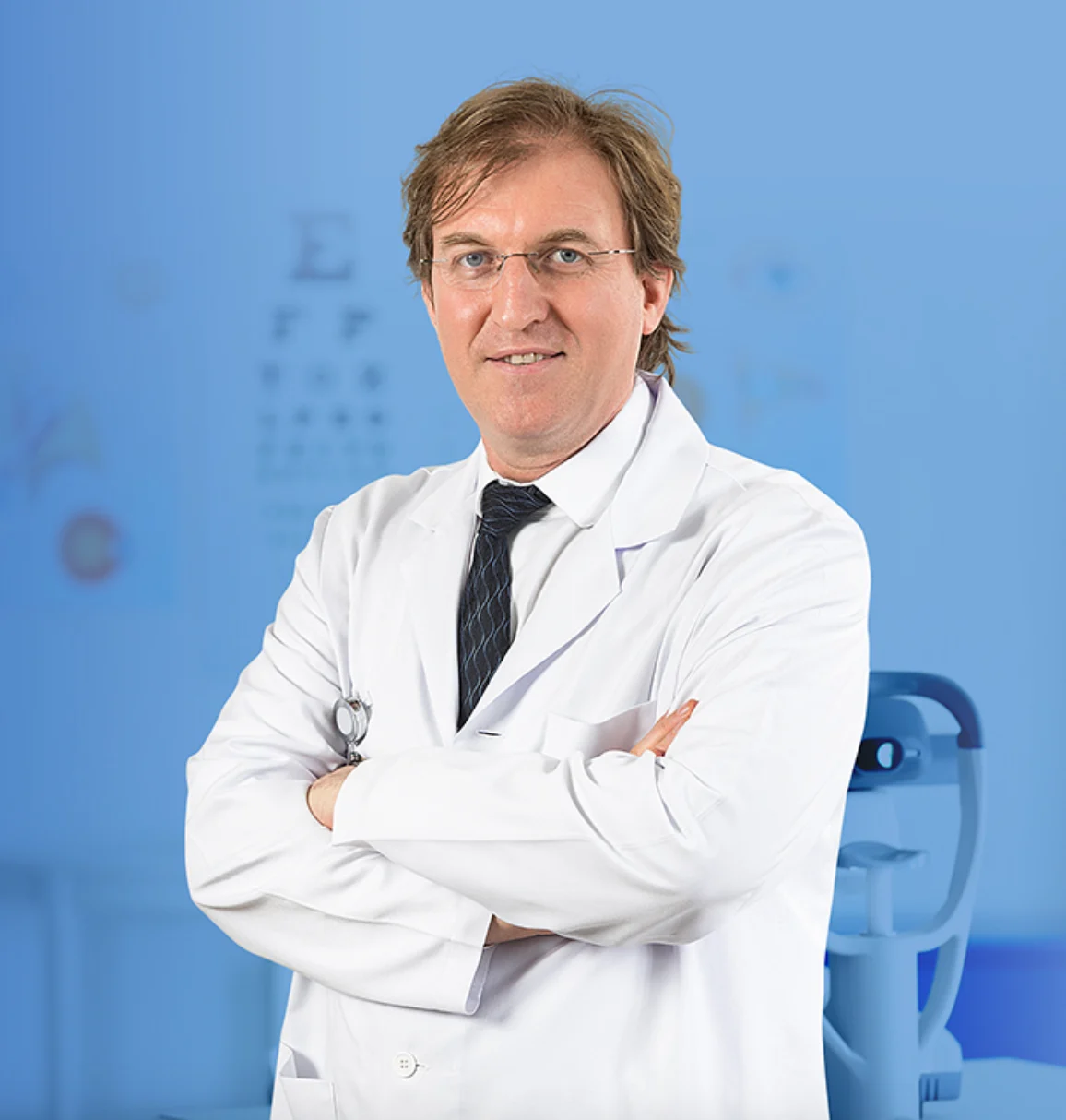
Prof. Dr. Fevzi Şentürk
Ophthalmology · Istanbul
▶ SSR Hastalığı ve Fotodinamik Tedavi Nedir?
{ AI · preliminary guidance }
onlineLet's talk about laser treatment

AI responses do not replace a medical diagnosis.
Konuyla ilgili kısa videolar
Tüm videolar →Kliniğin YouTube kanalından bu konuyla ilgili kısa açıklamalar. Toplam 3 video.
Vitrektomi Nedir ve Nasıl Tedavi Edilir?
Katarakt Nedir, Nasıl Tedavi Edilir? (CNN Türk Haber)

Retina Hastalıkları ve Tedavi Yöntemleri (CNN Türk Haber)
Photodynamic therapy aims to stop the leakage beneath the retina through the interaction between a light-sensitive medication given intravenously before treatment and the low-energy laser light then applied to the affected blood vessel area.
Central serous retinopathy (CSR) is an eye condition that develops when fluid collects beneath the retina and usually affects the central area of vision (the macula). Although it is seen more frequently in men aged 20–50, it can occur in any age group. Stress, cortisone use and certain lifestyle factors play an important role in the development of CSR.
Photodynamic therapy (PDT) is one of the modern treatment methods used particularly in chronic cases of CSR.
What Is CSR (Central Serous Retinopathy)?
Central serous retinopathy is characterised by the accumulation of fluid in the macular region caused by small leaks that occur in the retinal pigment epithelium layer.
This condition leads to blurring and distortion in the centre of vision and a marked decline in visual quality.
Symptoms of CSR
- Blurred vision
- Straight lines appearing curved or wavy
- Dark or shadowed areas within the field of vision
- Disturbance in colour perception
- Sudden loss or reduction of vision
Causes of CSR
Although its exact cause is not fully known, the following factors play a role in the development of CSR:
- Intense stress
- Cortisone use (in the form of medication, cream or spray)
- Hypertension (high blood pressure)
- Irregular sleep and fatigue
- Genetic predisposition
- Hormonal changes
How Is CSR Diagnosed?
The main methods used in diagnosis:
- Optical Coherence Tomography (OCT): Clearly shows the presence of fluid beneath the retina.
- Fluorescein Angiography: Images the leakage in the retinal vessels.
- Eye examination: Signs of the condition are assessed with visual acuity tests.
Treatment Methods for CSR
Some cases of CSR may resolve on their own. However, treatment is needed in cases that persist for a long time or that recur.
1. Medication
In some cases, fluid absorption can be accelerated with medication given orally or intravenously.
2. Laser Treatment
Low-dose laser applied to the area of leakage can help prevent fluid accumulation.
3. Photodynamic Therapy (PDT)
This is one of the methods used in the treatment of chronic CSR.
What Is Photodynamic Therapy (PDT)?
Photodynamic therapy is a special laser treatment used to seal the leakage beneath the retina in CSR.
- Before treatment, a light-sensitive medication called verteporfin is given through a vein.
- The affected blood vessel area is then targeted with low-energy laser light.
- The interaction between the medication and the laser light stops the vascular leakage.
Advantages of Photodynamic Therapy
- Can be applied in a targeted manner in chronic cases of CSR
- Does not harm the surrounding healthy tissue
- May contribute to improvement in visual quality
- Is intended to help reduce the risk of recurrence
The Process After Photodynamic Therapy
- The treatment usually takes 15–20 minutes.
- The patient can usually be discharged on the same day.
- Protection from sunlight is necessary for the first few days (because the medication is light-sensitive).
- Vision gradually begins to improve over the course of a few weeks.
Central serous retinopathy (CSR) is a condition that seriously affects visual quality but can be brought under control with early diagnosis and appropriate treatment. Photodynamic therapy (PDT) is considered one of the methods used in the treatment of chronic CSR.
Treatments often evaluated together
-
Central Serous Chorioretinopathy
Central serous chorioretinopathy (CSC) is a usually sudden-onset visual disturbance characterized by a build-up of fluid beneath the retina. It is most often seen in young and middle-aged men and usually affects a single eye.
-
Macular Degeneration (Age-Related)
Macular degeneration (age-related macular degeneration) is a retinal condition affecting the macula, the central part of the retina, and is one of the leading causes of central vision loss in older adults.
-
Argon Laser Photocoagulation
Argon laser photocoagulation uses laser energy to seal abnormal retinal blood vessel areas or the tissue around retinal tears, and is used for conditions such as diabetic retinopathy, retinal tears and retinal vein occlusion.

Book an Appointment
Your information reaches Prof. Dr. Fevzi Şentürk's clinic. A response is made within 24 hours.