Vitrectomy
Vitrectomy is a surgical procedure in which the eye's vitreous gel is removed, used to treat a range of retinal conditions such as retinal detachment, complications of diabetic retinopathy and macular hole.

Prof. Dr. Fevzi Şentürk
Ophthalmology · Istanbul
▶ Vitrektomi Nedir ve Nasıl Tedavi Edilir?
{ AI · preliminary guidance }
onlineLet's talk about your retina

AI responses do not replace a medical diagnosis.
Konuyla ilgili kısa videolar
Tüm videolar →Kliniğin YouTube kanalından bu konuyla ilgili kısa açıklamalar. Toplam 3 video.

SSR Hastalığı ve Fotodinamik Tedavi Nedir?

Tavuk Karası (Retinitis Pigmentosa) Hastalığı Nedir?

Hipertansiyon ve Göz
Vitrectomy is an eye surgery in which the vitreous gel is removed to gain direct surgical access to the retina, used in the treatment of several serious retinal conditions.
- Type
- Surgical
- Duration
- 45–90 minutes (varies by case)
- Anesthesia
- Local or general anaesthesia
- Stay
- Day case or short inpatient stay
- Recovery
- Gradual improvement over the first weeks; full recovery may take a few months
What Is a Vitrectomy?
Vitrectomy involves surgical removal of the vitreous, a gel-like substance contained within the eye. By extracting the vitreous, the surgeon gains direct access to the retina, enabling the performance of various corrective procedures including tear closure, membrane removal, or haemorrhage clearance. Following removal, the vitreous cavity is typically refilled with a specialized gas mixture, silicone oil, or balanced salt solution to preserve intraocular pressure.
This procedure represents a cornerstone of retinal surgical practice and is now predominantly performed via the “pars plana” approach, utilizing minimal incision sizes.
When Is Vitrectomy Performed?
Vitrectomy may be indicated in various serious retinal and vitreous pathologies:
- Retinal detachment (particularly in complex or post-traumatic presentations)
- Vitreous haemorrhage or tractional detachment secondary to advanced diabetic retinopathy
- Macular hole
- Epiretinal membrane (membrane proliferation on the retinal surface)
- Severe intraocular infection (endophthalmitis)
- Implanted or natural lens dislocation, or retained lens fragments
- Intraocular foreign body following ocular trauma
The determination to undertake the procedure depends upon the nature and extent of the condition as well as the general integrity of the eye structure.
How Is a Vitrectomy Performed?
Pars Plana Vitrectomy Technique
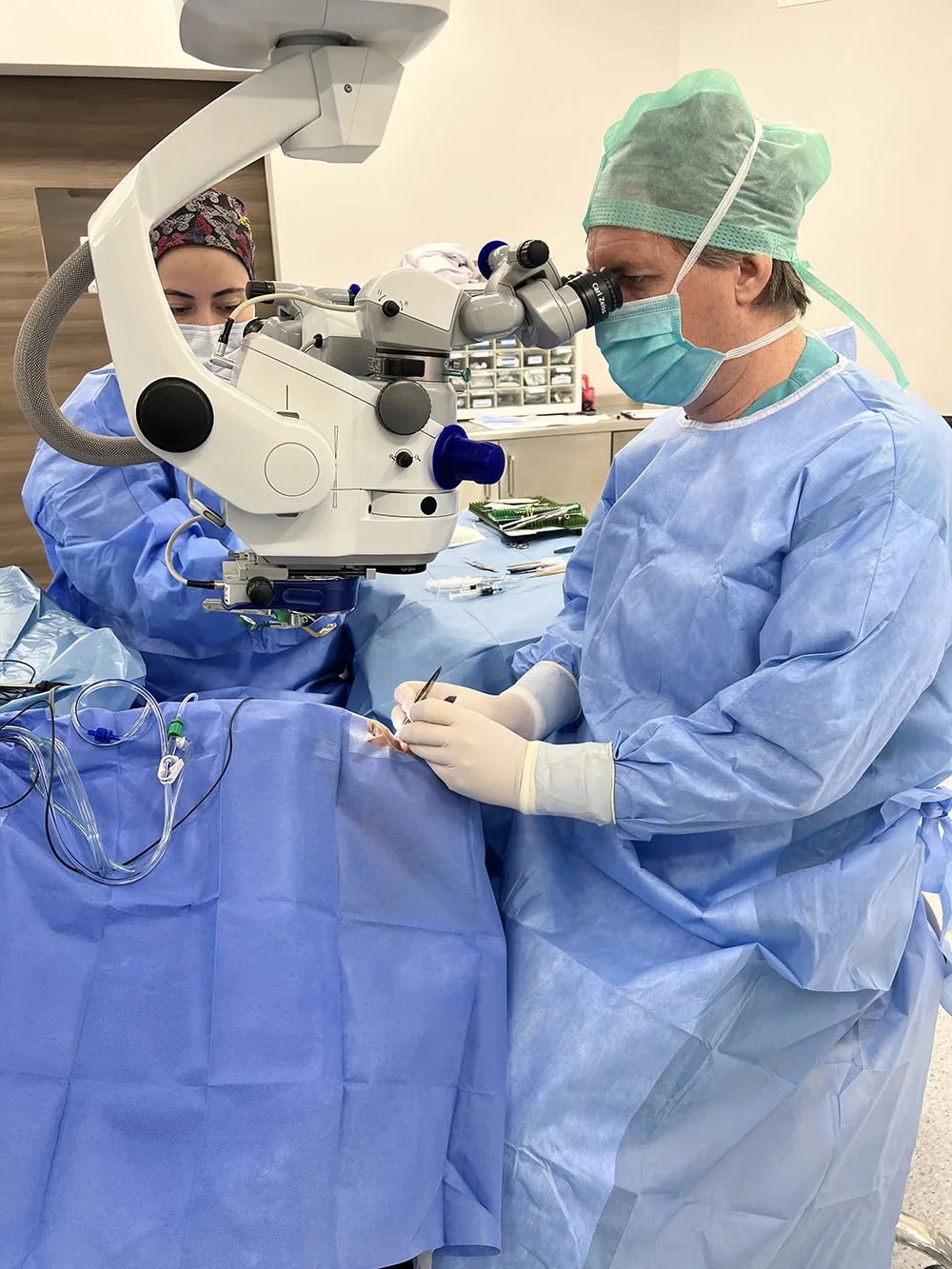
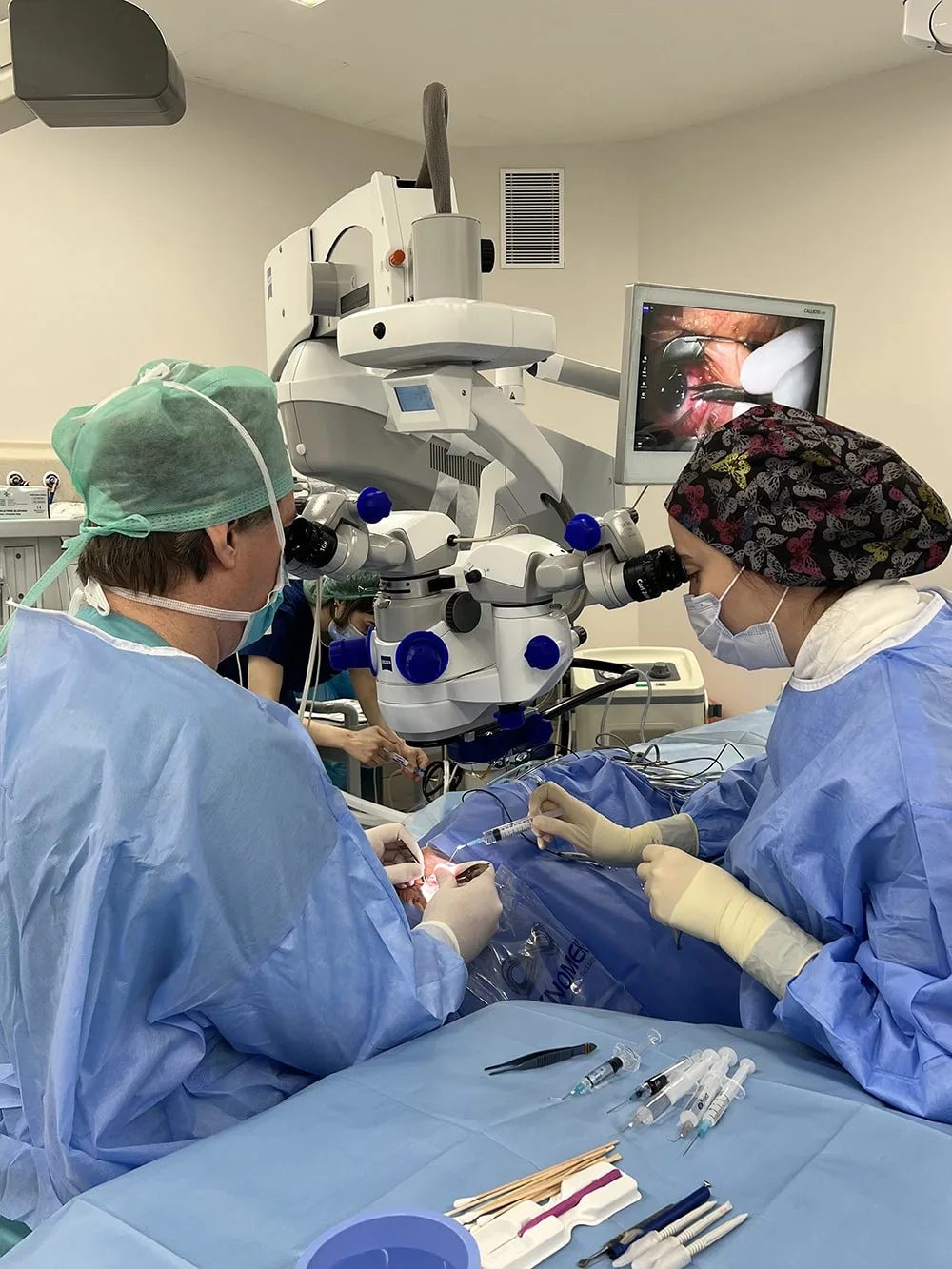
Pars plana vitrectomy, the predominant methodology, employs specialised micro-surgical instruments introduced into the eye via small incisions created in the sclera (the white outer layer). The vitreous gel is delicately sectioned and removed using a dedicated aspiration apparatus; subsequent retinal correction—such as tear sealing, membrane stripping, or haemorrhage evacuation—is then undertaken.
Supporting Substances Used During Surgery
Upon completion of surgery, the vitreous space is occupied with one of the following, selected according to clinical requirements:
- Balanced salt solution: Applied in less complex presentations.
- Gas tamponade: Exerts pressure on the retina’s posterior surface during the healing phase, facilitating reattachment; physiological absorption occurs gradually.
- Silicone oil: Furnishes extended structural support in more demanding cases; removal typically necessitates a subsequent surgical intervention.
What Is the Recovery Process Like After Vitrectomy?
- Where gas or silicone oil has been introduced, adherence to specific positional requirements designated by the physician (frequently prone positioning) may be necessary for a defined interval
- Commercial air travel should be avoided while intraocular gas remains present; clarification with the physician is essential
- Progressive changes in visual acuity may manifest during initial weeks and may persist until gas or oil dispersal or extraction is complete
- Consistent application of prescribed topical medications facilitates tissue healing
- Scheduled review appointments should be maintained as determined by the treating physician
What Are the Risks and Complications of Vitrectomy?
Vitrectomy serves as an essential intervention for serious retinal pathologies; however, as with all surgical procedures, certain potential adverse effects warrant consideration:
- Hastened lens opacification (prevalent, particularly when gas or silicone oil is employed)
- Return of retinal detachment or emergence of additional retinal breaks
- Transient or sustained elevation of intraocular pressure
- Infection (endophthalmitis) — uncommon yet potentially serious
- Vision obscuration related to silicone oil presence, potentially lasting until removal is performed
Should sudden visual deterioration, escalating discomfort, or ocular redness develop in the postoperative period, prompt medical consultation is warranted.
What Should Be Considered in Daily Life After Vitrectomy?
- The head positioning advised by the physician should be observed throughout the specified timeframe
- Air travel must be deferred while gas bubble presence persists within the eye
- Strenuous activities and forward flexion may require temporary restriction during early recovery
- Water contact with the eye should be minimized and ocular manipulation avoided
- Adherence to the prescribed instillation schedule and duration of topical medications remains important
- Attending scheduled follow-up assessments permits appropriate monitoring of the healing trajectory
Consultation with a retinal specialist through comprehensive ocular examination is advised for thorough information and individualised assessment pertaining to vitrectomy.
Frequently Asked Questions
What is a vitrectomy?
Vitrectomy is a surgical procedure in which the vitreous gel filling the eye is removed to gain direct access to the retina, used to treat a range of retinal conditions.
What conditions is vitrectomy used for?
It is considered for retinal detachment, vitreous haemorrhage from advanced diabetic retinopathy, macular hole, epiretinal membrane and certain serious intraocular infections.
How long does a vitrectomy take?
The duration varies with the complexity of the case; the procedure is generally completed within 45–90 minutes.
Why do I need to hold a specific head position after vitrectomy?
When gas or silicone oil is placed inside the eye, maintaining the head position recommended by the doctor for a period allows the substance to press against the retina and support healing.
Can I fly after a vitrectomy?
Air travel is strongly discouraged as long as a gas bubble remains in the eye; this must always be discussed with the doctor.
Does cataract develop after vitrectomy?
Accelerated cataract development is common, particularly in eyes where gas or silicone oil is used; this can be treated with a separate cataract surgery.
When does vision become clear after vitrectomy?
Visual clarity changes gradually depending on the substance used and the underlying condition; blurring may persist until the gas or oil is fully absorbed or removed.
Is vitrectomy performed under general or local anaesthesia?
The procedure may be performed under local or general anaesthesia depending on the complexity of the case and the patient's condition.
Treatments often evaluated together
-
Retinal Detachment
Retinal detachment occurs when the retina separates from its underlying supporting tissue and is a serious eye condition that requires urgent evaluation.
-
Macular Degeneration (Age-Related)
Macular degeneration (age-related macular degeneration) is a retinal condition affecting the macula, the central part of the retina, and is one of the leading causes of central vision loss in older adults.
-
Intravitreal Injection
Intravitreal injection is a procedure used to treat retinal diseases such as macular degeneration, diabetic macular oedema and retinal vein occlusion, in which medication is delivered directly into the eye.


Book an Appointment
Your information reaches Prof. Dr. Fevzi Şentürk's clinic. A response is made within 24 hours.