Macular Hole
A macular hole is a small hole or tear that forms in the macula, the part of the retina responsible for central vision; it affects sharp, detailed vision and may require surgical treatment in more advanced stages.

Prof. Dr. Fevzi Şentürk
Ophthalmology · Istanbul
▶ Vitrektomi Nedir ve Nasıl Tedavi Edilir?
{ AI · preliminary guidance }
onlineLet's talk about your retina

AI responses do not replace a medical diagnosis.
Konuyla ilgili kısa videolar
Tüm videolar →Kliniğin YouTube kanalından bu konuyla ilgili kısa açıklamalar. Toplam 3 video.

Retina Hastalıkları ve Tedavi Yöntemleri (CNN Türk Haber)

SSR Hastalığı ve Fotodinamik Tedavi Nedir?

Tavuk Karası (Retinitis Pigmentosa) Hastalığı Nedir?
A macular hole is a small hole in the macula at the back of the eye that affects central vision and, in most full-thickness cases, may be treated with pars plana vitrectomy.
What Is a Macular Hole?
A macular hole is a small tear or hole that forms in the macula, the region of the retina at the back of the eye responsible for central vision. It particularly affects sharp, clear and detailed vision. It usually occurs in one eye and may progress over time.
The macula is the centre of visual functions related to reading, face recognition and fine, detailed work. A hole forming in this region may cause significant deterioration in vision.
Why Does It Occur?
A macular hole is most often the result of natural changes that develop with age. However, it may also arise for different reasons:
- Traction from the vitreous (the gel inside the eye) adhering to the macula
- Advanced age (particularly over 60)
- Ocular trauma (impact)
- High myopia
- Following retinal detachment
- Diabetic eye diseases
This condition may occur as the vitreous (gel tissue) shrinks and contracts over time, creating tension on the macula and subsequently leading to a tear.
What Are the Symptoms?
A macular hole may present with the following symptoms:
- Blurred or distorted vision in the centre
- Difficulty reading, with letters appearing missing or distorted
- Straight lines appearing curved or broken
- A dark or empty spot in the centre of the visual field (scotoma)
- A distorted central image when looking with one eye
These symptoms may increase gradually or, in some cases, progress more rapidly.
How Is It Diagnosed?
A macular hole can be diagnosed through a retinal examination and imaging tests performed by an eye doctor. The most commonly used method is:
- OCT (Optical Coherence Tomography): The degree and size of the hole forming in the macula are measured in detail. The response to treatment and the healing process after surgery are also followed with this method.
What Are Its Stages?
Macular holes are classified from Stage 1 to Stage 4:
- Stage 1: The initial phase; generally small and with a chance of reversal.
- Stages 2–3: The stages at which a full-thickness hole forms.
- Stage 4: Larger, stable holes in which the vitreous has completely separated.
How Is It Treated?
A macular hole does not heal on its own. Its treatment is surgical:
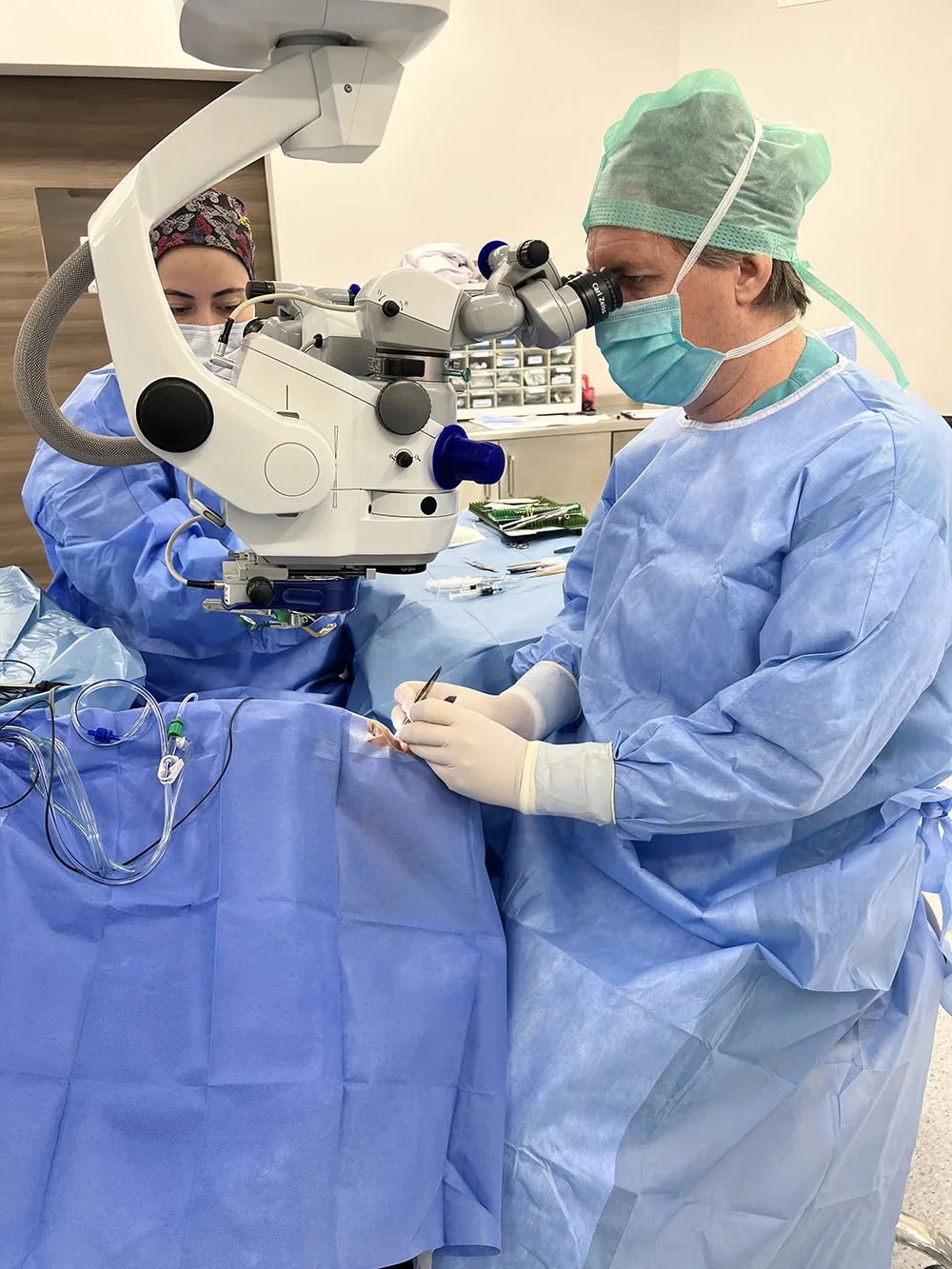
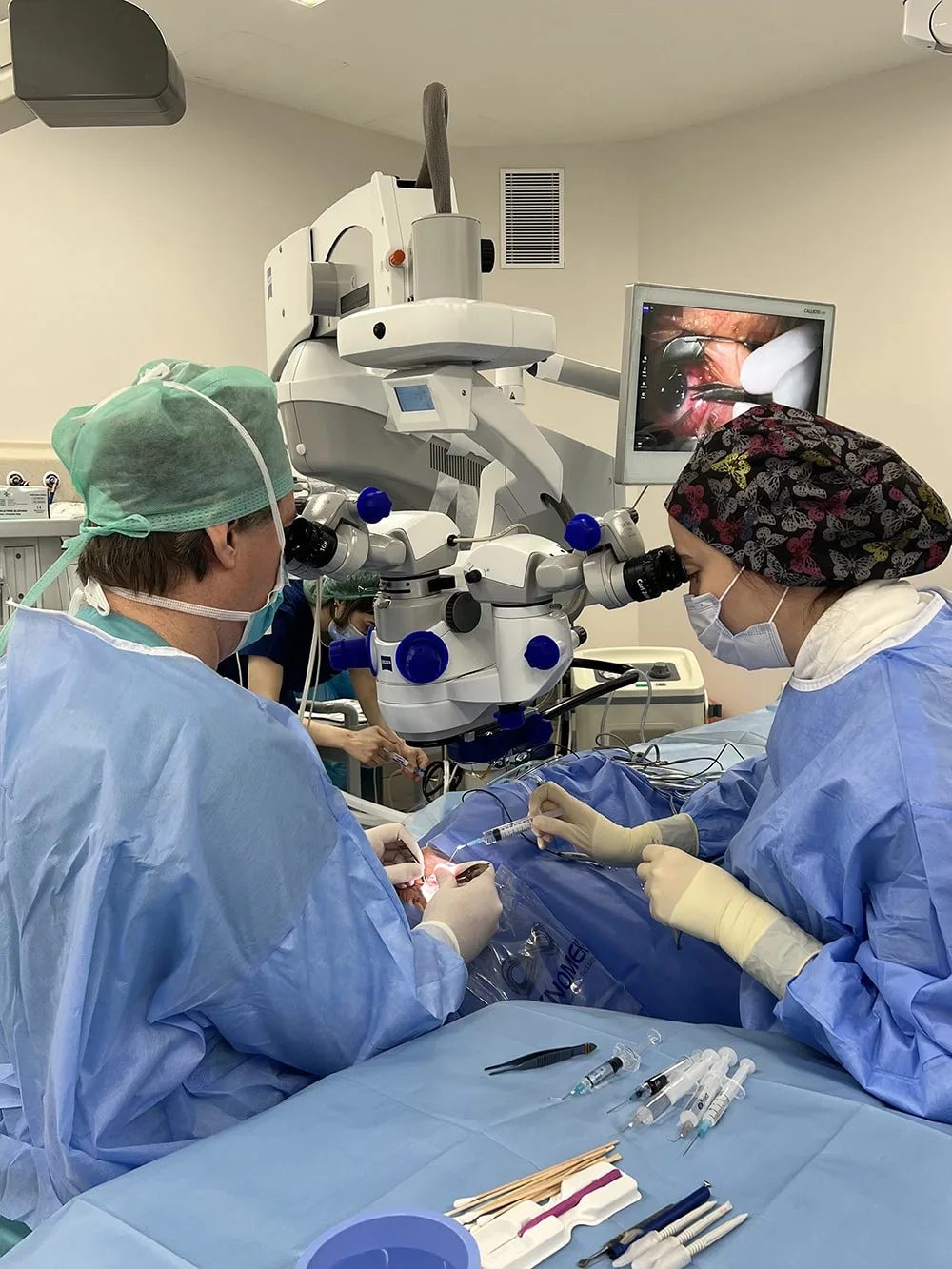
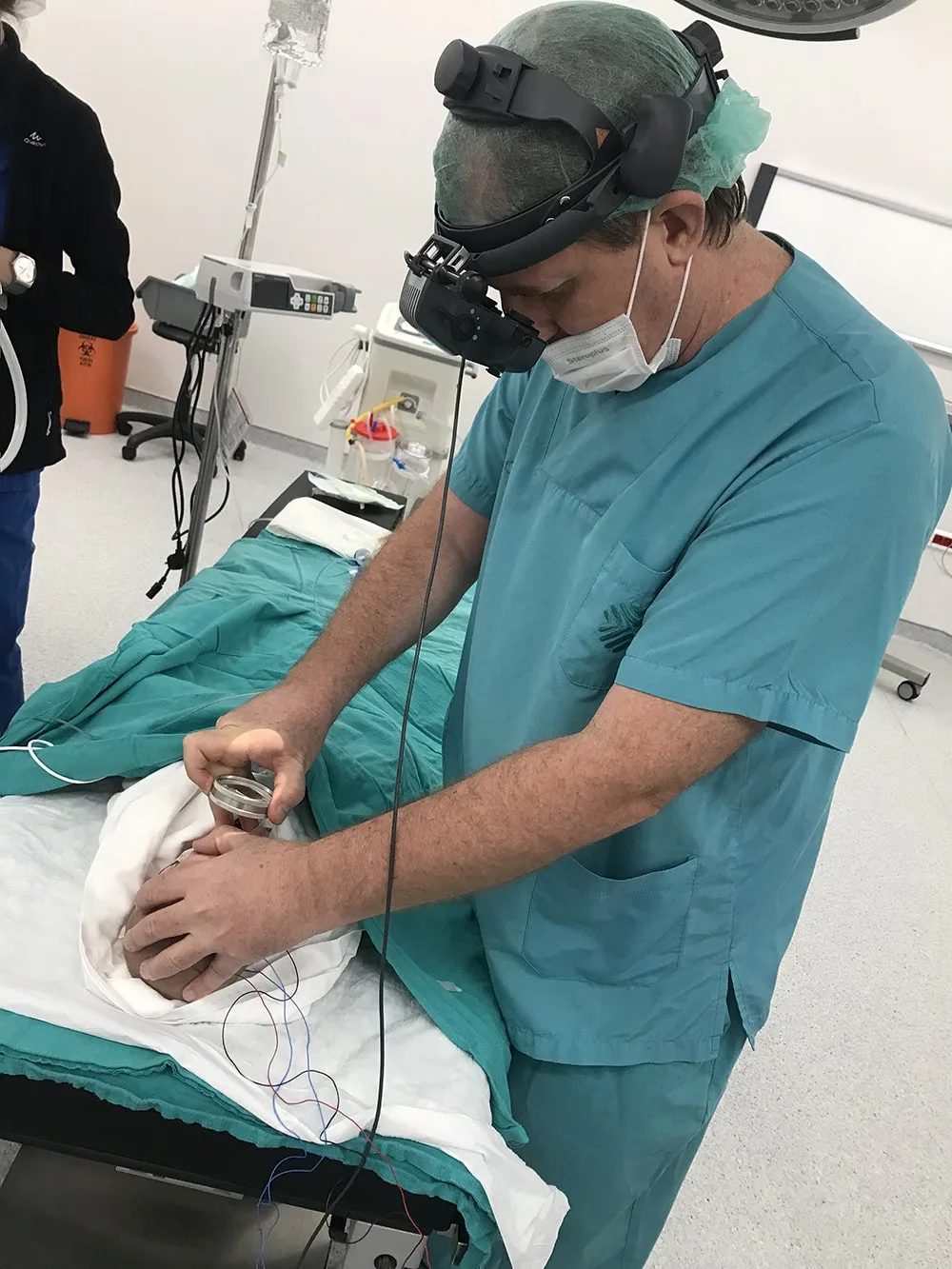
Pars Plana Vitrectomy Surgery
- The vitreous gel inside the eye is removed.
- The membrane over the macula (ERM or ILM) is carefully peeled.
- Gas or silicone is placed inside the eye.
- A head position is recommended after surgery (to maintain contact with the gas).
- It is generally performed under local anaesthesia, with same-day discharge.
The Postoperative Process
- Visual recovery may take from a few weeks to a few months.
- During the first weeks, it may be necessary to remain in a face-down position (particularly if gas has been used).
- Closure of the hole after surgery is possible in many cases.
- Although the hole closes, vision may not return completely to normal, but improvement is possible.
Frequently Asked Questions
Can a macular hole close on its own?
Some early-stage (Stage 1) macular holes may rarely heal spontaneously. However, most full-thickness holes, particularly from Stage 2 onward, do not close without surgery. Observation may be chosen in the early stage, but surgery may be required in more advanced stages.
Does a macular hole cause complete blindness?
No. A macular hole affects central vision, leading to impairment in functions such as reading, face recognition and seeing fine detail. However, peripheral (side) vision is usually preserved. Complete blindness therefore does not occur, but quality of life may be seriously affected.
How much will my vision improve after surgery?
Visual improvement varies from person to person. The longer a hole has been present, the lower its potential for improvement may be. In cases treated early, the potential for recovery may be higher. Although a full return to normal vision is not always possible, improvement in clarity and distortion may be seen.
Is macular hole surgery painful?
No. The surgery is generally performed under local anaesthesia and is painless. Patients feel comfortable during the procedure. Mild stinging or blurring may occur afterwards, but this is usually temporary.
If gas is placed, why do I need to lie face down?
Gas presses against the macula inside the eye and helps the hole to close. For this pressure to be effective, it may be necessary to remain in a head-down, face-down position for a certain period. The length of this period varies according to the patient and the type of gas used.
Can a macular hole develop in both of my eyes?
Yes, although rarely, this is possible. In patients with a macular hole in one eye, the risk of it developing in the other eye is around 10–15%. For this reason, the seemingly healthy eye should also be examined regularly.
Why did the hole in my eye form when I have never had any trauma?
A macular hole most often forms due to age-related traction of the vitreous. Although trauma, high myopia or retinal diseases increase the risk, a macular hole can also develop without any obvious cause.
What happens if I do not have surgery?
If left untreated, a macular hole may continue to enlarge. This may lead to a further decline in visual quality. In addition, in cases treated late, the potential for recovery after surgery may also decrease. For this reason, early evaluation is important.
Treatments often evaluated together
-
Vitrectomy
Vitrectomy is a surgical procedure in which the eye's vitreous gel is removed, used to treat a range of retinal conditions such as retinal detachment, complications of diabetic retinopathy and macular hole.
-
Epiretinal Membrane
An epiretinal membrane (retinal membrane) is a condition in which a membrane forms over the retina, the light-sensing layer at the back of the eye, potentially affecting vision and, in advanced stages, leading to permanent vision loss.
-
Macular Degeneration (Age-Related)
Macular degeneration (age-related macular degeneration) is a retinal condition affecting the macula, the central part of the retina, and is one of the leading causes of central vision loss in older adults.


Book an Appointment
Your information reaches Prof. Dr. Fevzi Şentürk's clinic. A response is made within 24 hours.